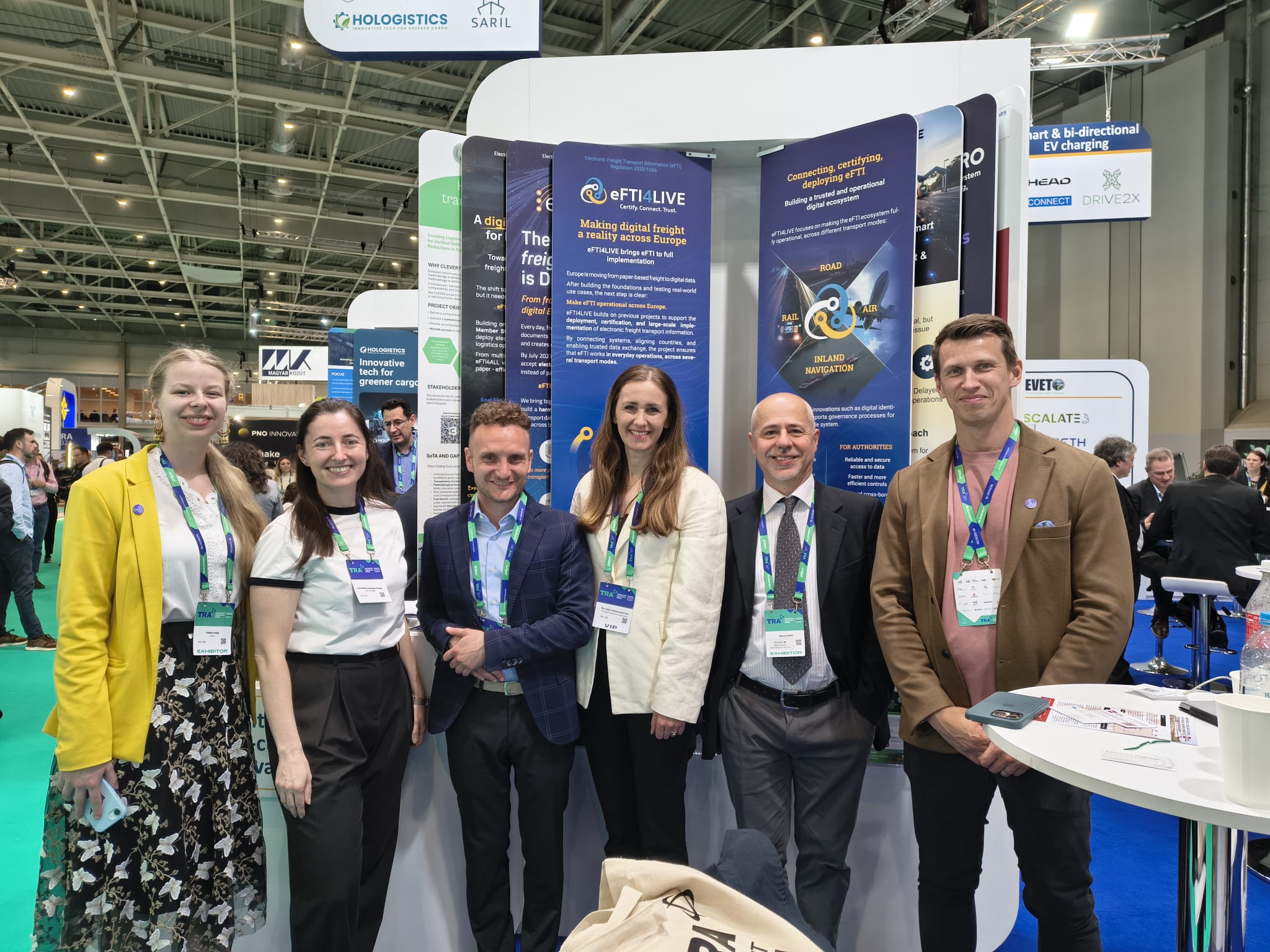
The eFTI Community was strongly represented at the Transport Research Arena (TRA) 2026 in Budapest, where eFTI4EU, together with its sister projects eFTI4ALL and eFTI4LIVE, shared insights on the future implementation of the eFTI Regulation.
Across several dedicated presentations, project partners explored eFTI from different perspectives, including its strategic importance, the transport of dangerous goods, business opportunities for economic operators, and applications in rail and inland waterways transport.
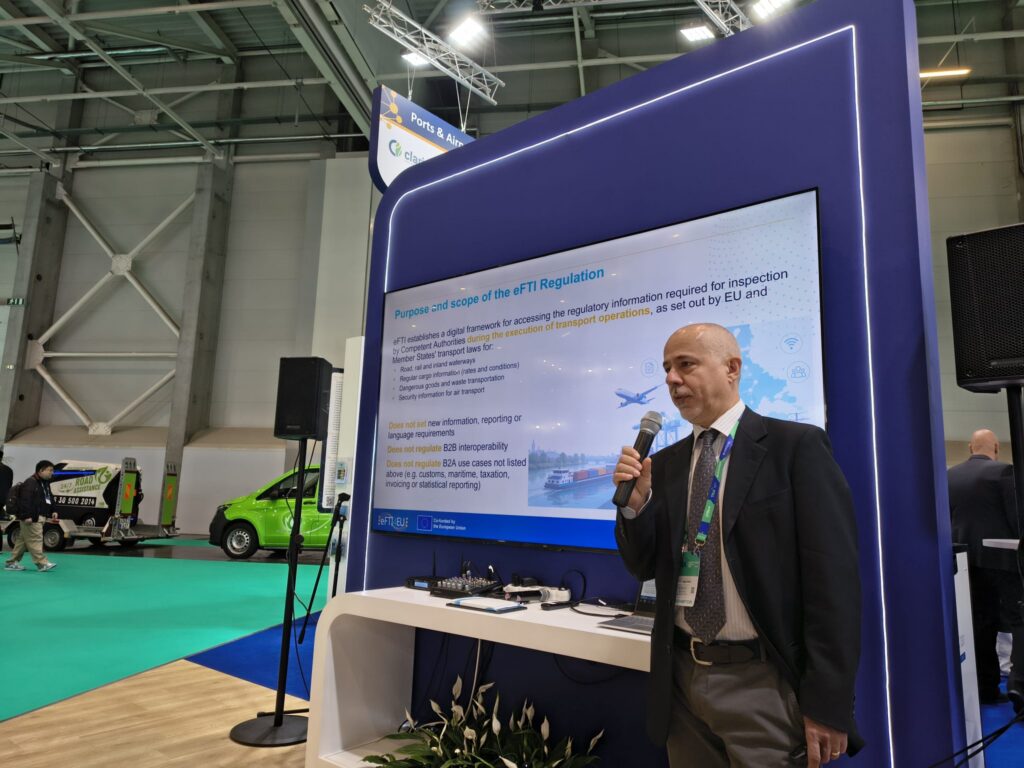
One of the key contributions came from Marco Gorini (Circle SPA, member of the eFTI Experts Team), who provided a strategic overview of the role of eFTI in supporting the digital transformation of freight transport across Europe.
eFTI: much more than paperless transport
As highlighted during the presentation, eFTI should not be viewed simply as a tool for replacing paper documents. The Regulation establishes a common European framework for the electronic exchange of freight transport information between economic operators and competent authorities.
By creating legal certainty, defining common acceptance rules, and supporting harmonised data requirements across Member States, eFTI lays the foundations for a more efficient and interoperable freight transport ecosystem.
Today, freight transport information is often entered multiple times, stored across disconnected systems, and interpreted differently by various stakeholders. The eFTI framework aims to address these inefficiencies by promoting common data structures, greater reuse of information, and improved data quality. The expected benefits include faster administrative procedures, more effective enforcement activities, and more efficient logistics operations.
Importantly, eFTI does not replace existing commercial transport documents such as the CMR or e-CMR. Instead, these documents can serve as sources for the digital datasets that are made available to competent authorities. Authorities, in turn, only access the regulatory information they are authorised to view.
Interoperability is more than a technical challenge
A central message of the presentation was that the main challenge ahead is interoperability. While technical interoperability is essential, achieving the objectives of eFTI also requires alignment across organisations, governance structures, business processes, national procedures, digital maturity levels, and existing legacy systems. In this sense, interoperability is as much a governance challenge as it is a technological one.
With the legal framework now largely established, attention is increasingly shifting towards implementation and operational deployment. Success will depend on the readiness of Member States, the availability of certified platforms, clear certification procedures, cross-border testing activities, capacity building initiatives, and strong cooperation between public and private stakeholders.
The presentation concluded with an important reminder: the ultimate objective should not be limited to regulatory compliance. Rather, the wider ambition should be the achievement of comprehensive interoperability across the European freight transport ecosystem.
As demonstrated at TRA 2026, projects such as eFTI4EU, eFTI4ALL, and eFTI4LIVE continue to play a crucial role in supporting this transition and helping stakeholders prepare for the future of digital freight transport.