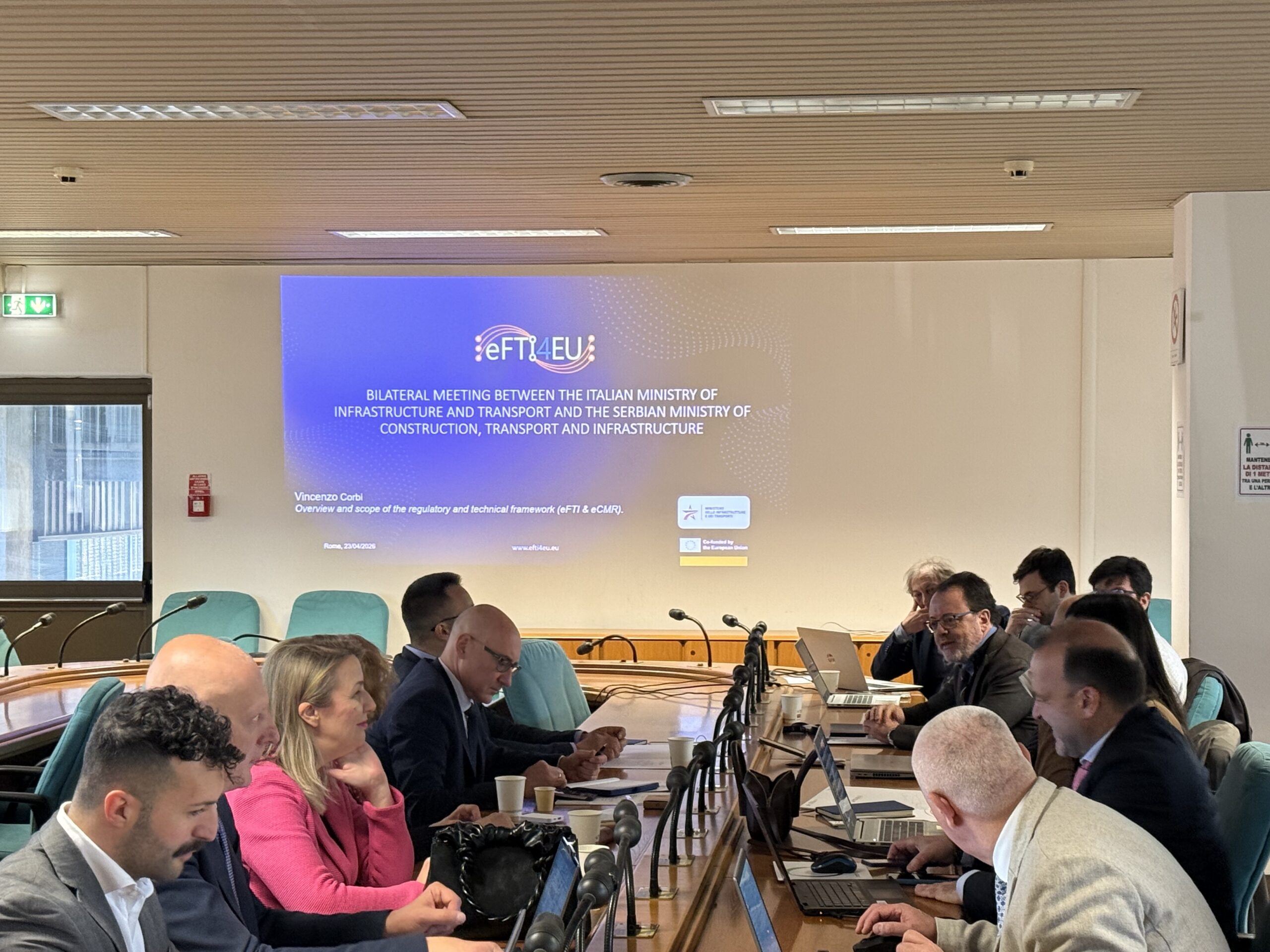
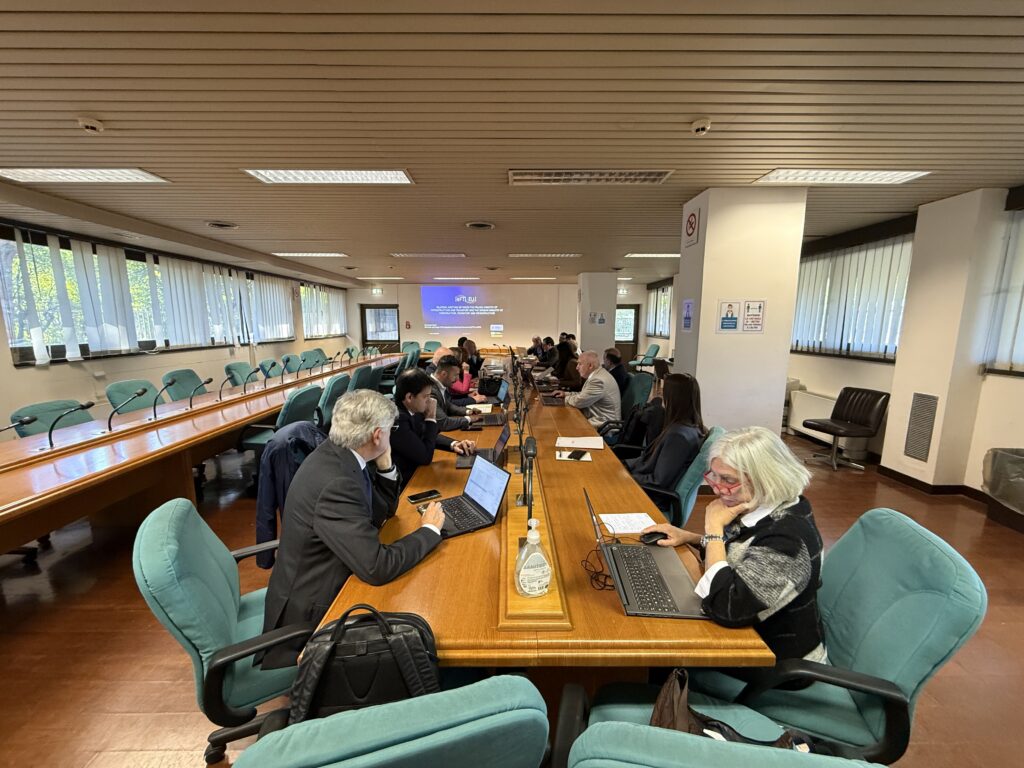
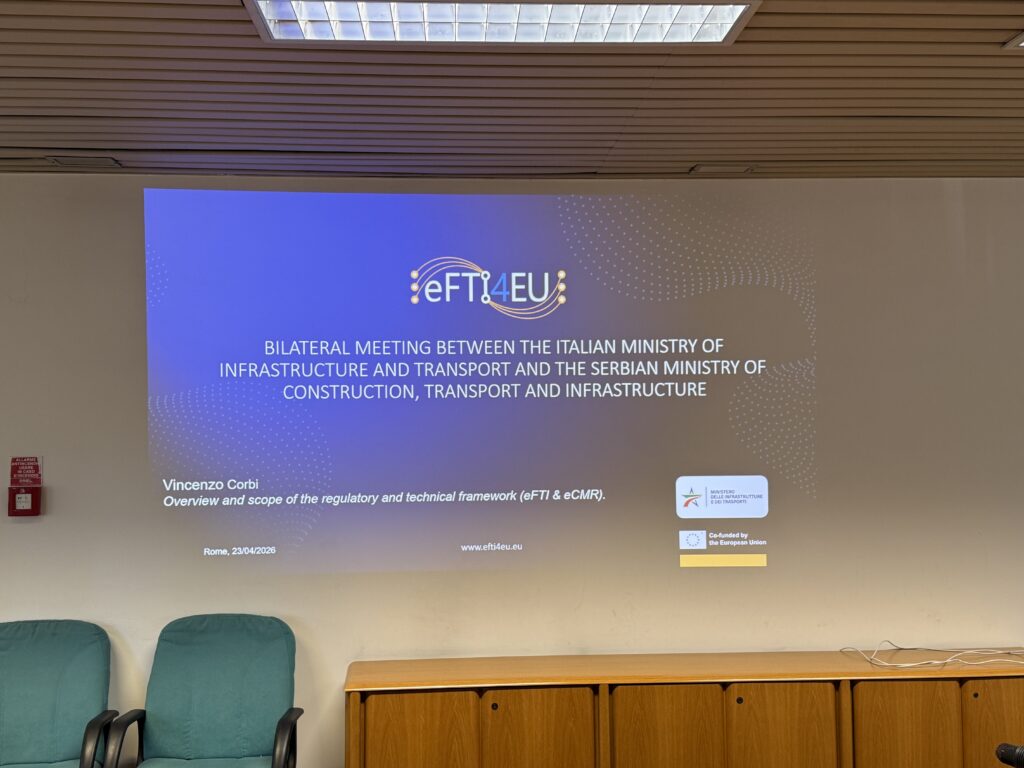
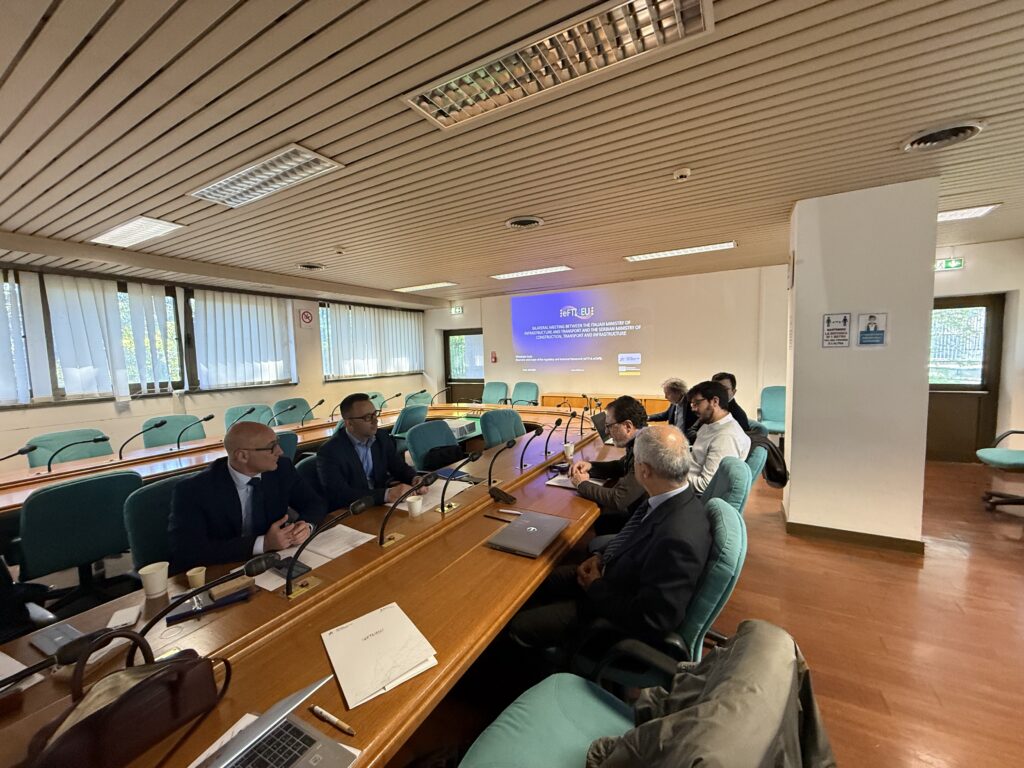
On 23 April 2026, the Italian Ministry of Infrastructure and Transport welcomed a delegation from the Ministry of Construction, Transport and Infrastructure of the Republic of Serbia for a bilateral meeting held at its headquarters in Rome. The visit was organised in the framework of the eFTI4EU project, following a formal request from the Serbian authorities to gain insights into Italy’s approach to implementing eFTI.
This initiative reflects the strong collaboration within the Italian eFTI4EU team, which brings together the Ministry, RAM – Logistica, Infrastrutture e Trasporti S.p.A. (as affiliated entity), and Circle Group. It also highlights the growing interest in eFTI beyond national and EU borders.
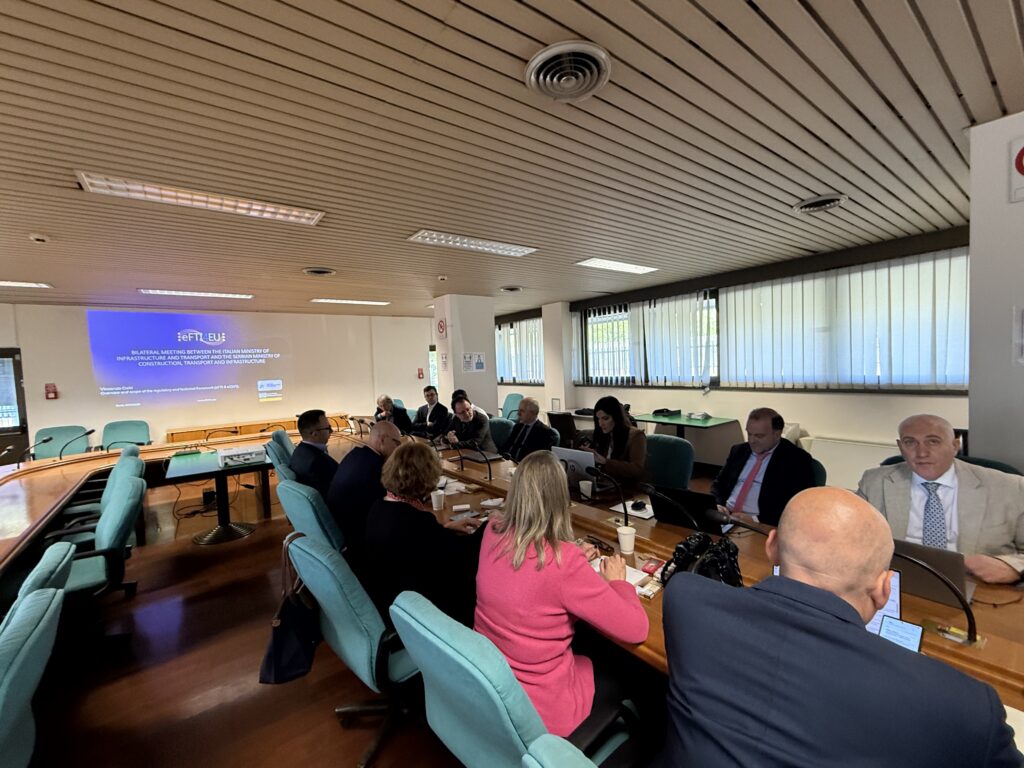
During the meeting, participants were introduced to the eFTI4EU project, with a particular focus on the ongoing pilot activities supporting the practical implementation of the Regulation. A dedicated session provided an in-depth overview of these activities, offering concrete examples of how eFTI is being tested and deployed.
The Italian delegation also presented its national approach to eFTI implementation, outlining how it aligns with the broader strategy for logistics digitalisation. This includes the development of an integrated ecosystem involving both public authorities and private stakeholders, aimed at enabling seamless and efficient data exchange.
Beyond the technical exchange, the visit represents an important step in knowledge transfer between countries at different stages of eFTI adoption. By sharing experiences and best practices, initiatives like this contribute to building a more cohesive and interoperable digital freight transport environment.
Moreover, the meeting underscores the relevance of eFTI and its related EU co-funded projects as a reference point not only within the European Union, but also for neighbouring countries interested in aligning with its principles and systems.
Strengthening cooperation at international level is key to expanding the reach and impact of eFTI, supporting the transition towards a more connected, transparent, and efficient freight transport ecosystem across and beyond Europe.