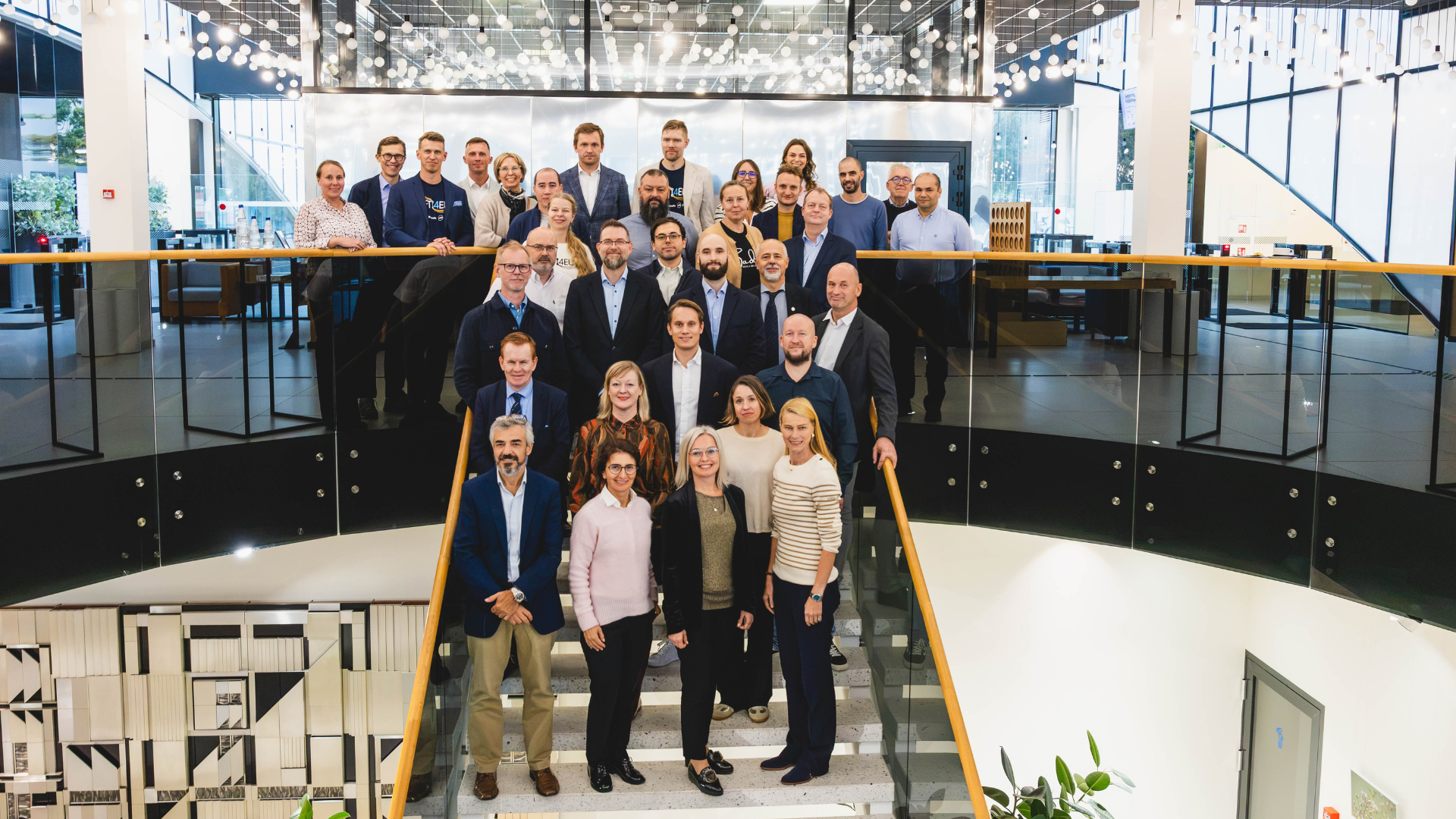
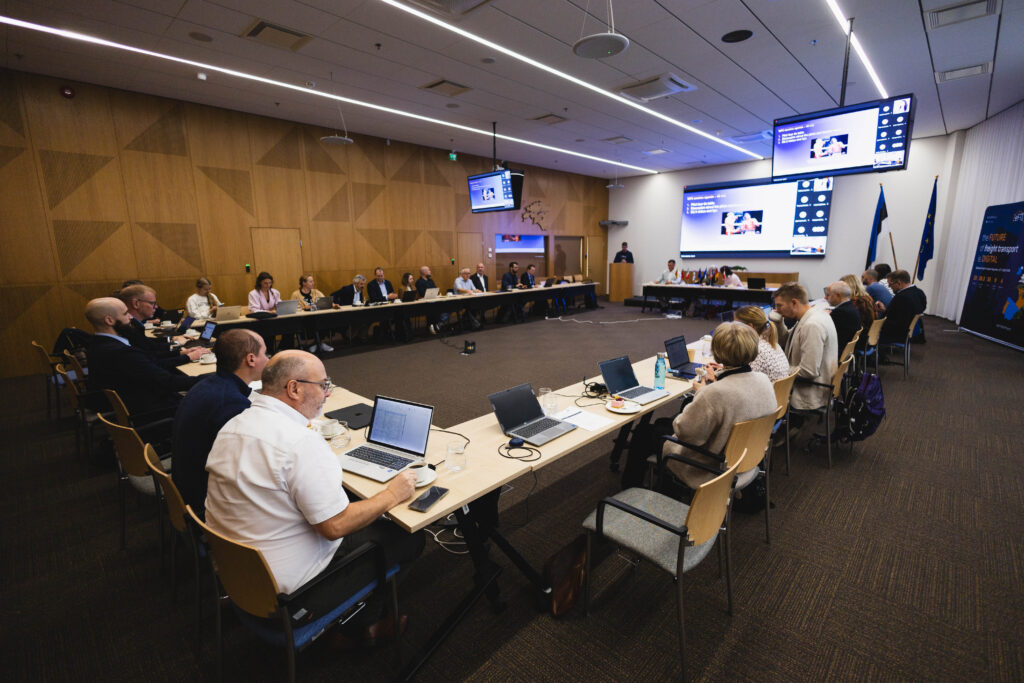
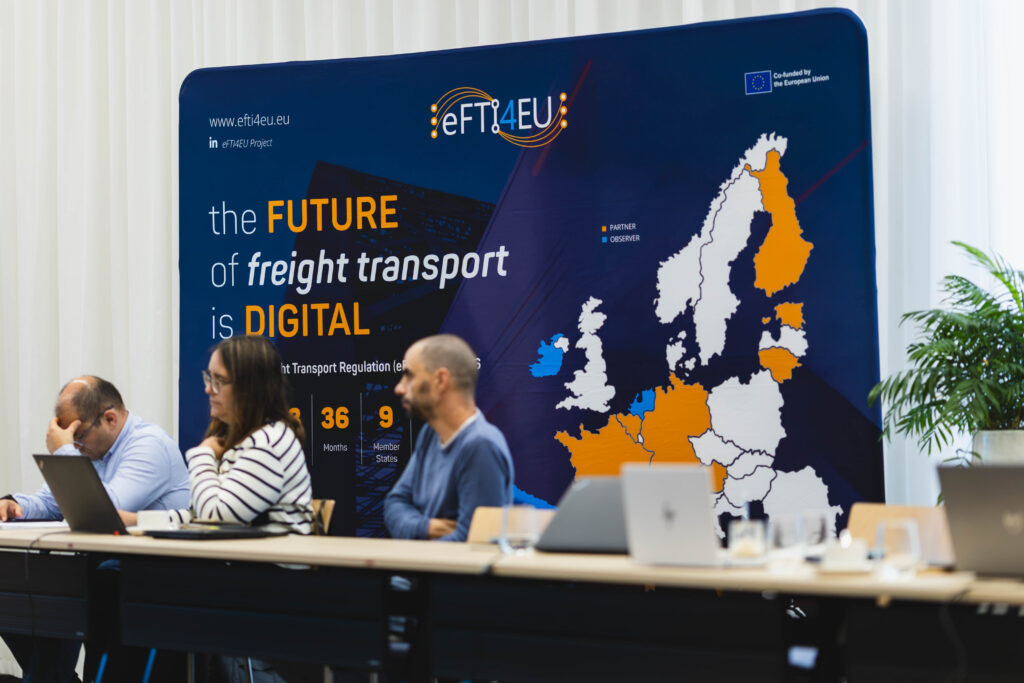
eFTI4EU partners from nine European countries met in Tallinn on 23 and 24 September 2026 for the project’s final consortium meeting, joined by representatives of the European Commission’s DG MOVE eFTI team.
The two-day meeting provided an opportunity to take stock of the work carried out since the launch of eFTI4EU in April 2023, review the results achieved across the different work streams and discuss how the knowledge, technical solutions and practical experience developed within the project can support the next phase of eFTI implementation in Europe.
In these last three years, the eFTI4EU consortium has worked to support the development of interoperable solutions for the digital exchange of freight transport information across borders, in line with the eFTI Regulation.
From pilots to real-life testing
A central part of the meeting was dedicated to the results of national pilots and cross-border testing activities.
Partners reviewed practical experiences from different Member States, including the use of digital freight documentation in real transport and enforcement scenarios. Estonia’s experience with electronic waybills was highlighted in particular, showing how digital data flows are already being used in sectors such as forestry, road construction, agriculture and waste management.
The consortium also discussed the outcomes of interoperability tests and real roadside control activities, where competent authorities and private operators worked together to assess how eFTI data can be accessed and used in practice.
These activities have helped identify both the benefits of digital freight information exchange and the operational aspects that still need to be refined ahead of full implementation.




Building the technical foundations for eFTI
The final meeting also offered an opportunity to review the project’s technical achievements.
Over the course of eFTI4EU, partners have contributed to the development of the technical specifications and common building blocks needed for a functioning European eFTI ecosystem.
Work has included further definition of the architecture and requirements for eFTI Gates and competent authority access points, as well as the development of governance recommendations to support future operations.
The project also presented an open-source eFTI Gate reference implementation, designed to help Member States develop, test and validate their national solutions more efficiently.
Technical teams have additionally worked on data models and exchange schemas aligned with the common eFTI dataset, while analysing secure communication approaches based on eDelivery and REST interfaces to support reliable and trusted cross-border data exchange.
A final meeting beyond the conference room
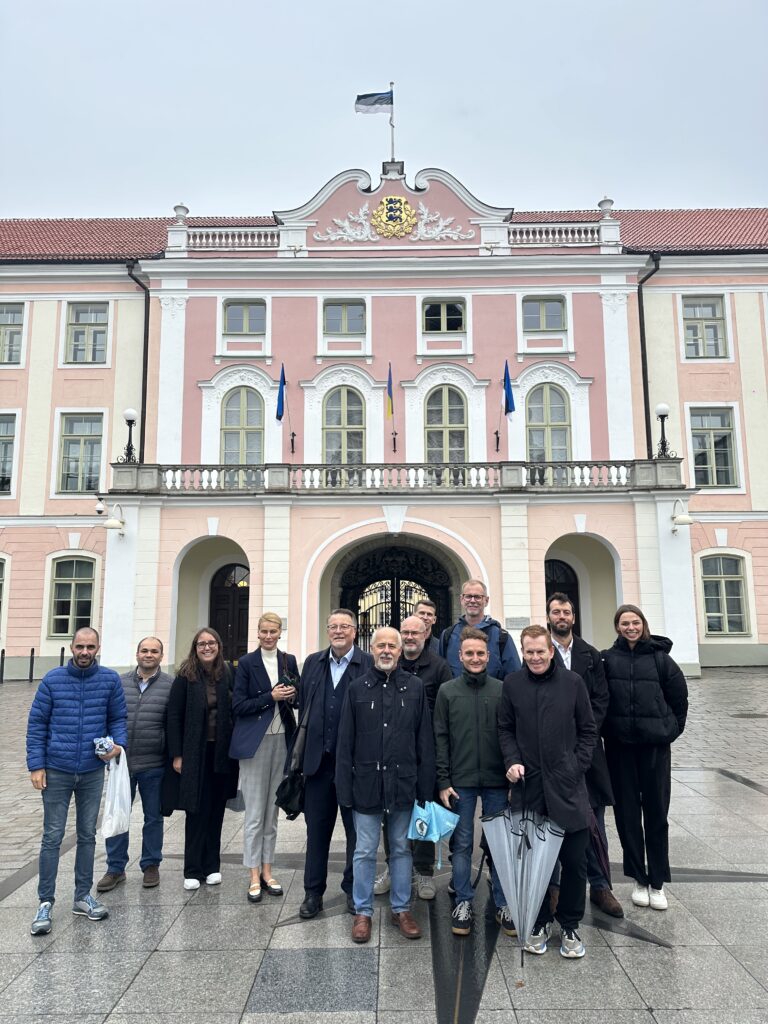
The Tallinn gathering was also an opportunity for partners to spend time together outside the formal meeting sessions and celebrate the cooperation built over the course of the project.
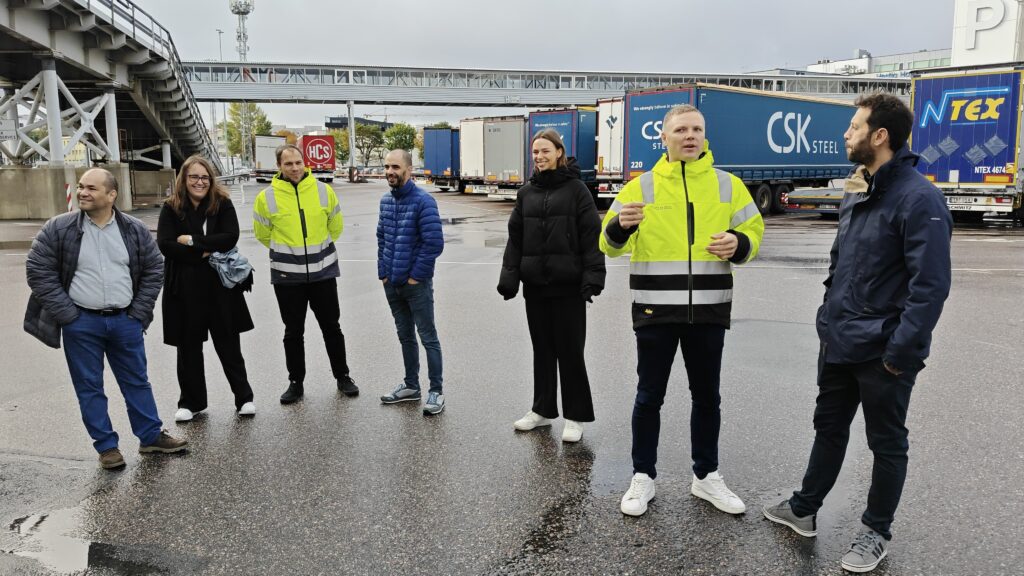
The programme included a visit to the Port of Tallinn, offering participants a closer look at one of the country’s key transport and logistics hubs. Partners also took part in a guided cultural tour of Tallinn’s historic city centre, which was warmly appreciated and provided another opportunity to discover the host city together.
A social dinner brought the consortium together once more in an informal setting, giving partners the chance to celebrate the project’s achievements and the collaboration developed over the past years.


Looking beyond eFTI4EU
Although eFTI4EU is approaching its planned conclusion at the end of 2026, the work started within the project will continue.
During the meeting, partners discussed how results, knowledge and technical developments can be transferred smoothly into the next generation of eFTI initiatives, in particular eFTI4ALL and eFTI4LIVE.
The focus will increasingly shift towards further testing, validation, operational governance and implementation readiness, with the common objective of ensuring that national eFTI Gates, certified platforms and competent authorities are prepared for the full application of the Regulation on 9 July 2027.
The Tallinn meeting therefore marked both the closing phase of eFTI4EU and the continuation of a broader European cooperation effort that will remain essential as eFTI moves from development and testing towards real implementation.
A sincere thank you to all project partners, stakeholders and representatives of the European Commission who have contributed to the work and results achieved throughout eFTI4EU.
A special thank you also goes to our Estonian project partners for their warm hospitality, and in particular to the project coordinators at the Estonian Ministry of Climate for welcoming the consortium and hosting the final meeting at their institutional premises.
All pictures courtesy of Priit Jõesaar, DAYLIGHT FILMS.